

Introduction
Ask around in Dubai about the one facial people keep returning to, and Hydrafacial comes up more often than most. It is quick, it does not leave the skin red or flaky, and many clients book it before an event or as a regular monthly reset.
This guide explains what a Hydrafacial actually involves, what it can and cannot do for your skin, and how to tell whether it suits you. If you are thinking about booking a session at Solean Clinic, it should help you walk in with realistic expectations. Explore our Hydrafacial Dubai treatment options to learn more.
Why Hydrafacial Has Become a Regular Treatment in Dubai
Skin here deals with strong UV exposure for most of the year, dry air indoors from constant air conditioning, and fine dust that settles on the face daily. Add sunscreen, sweat and makeup on top of that, and pores clog faster than many people expect. Hydrafacial was designed around cleansing and hydration together, which is why it fits the way skin behaves in this climate.
What Is a Hydrafacial?
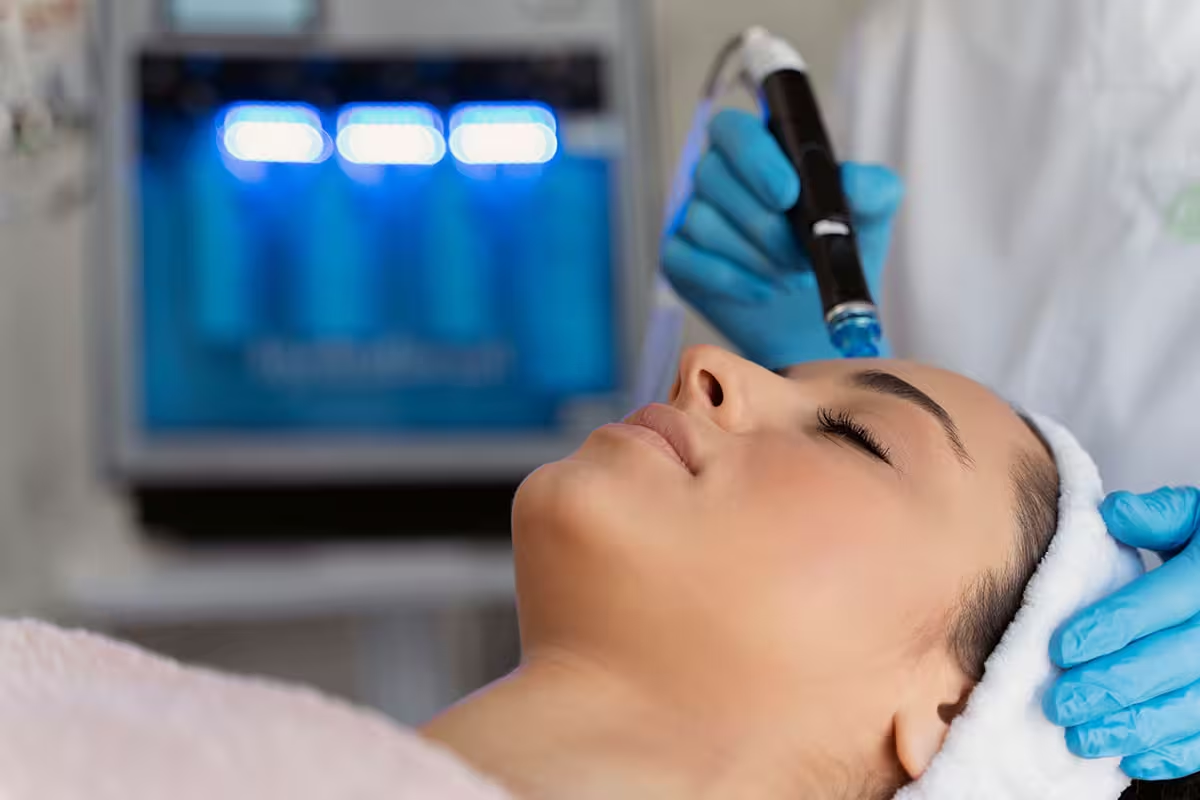
Hydrafacial is a non-invasive facial treatment that uses a handheld device to cleanse, exfoliate, extract impurities and infuse the skin with serums in a single appointment. The name is a brand, and the technology behind it is patented, so it is worth confirming that your clinic uses the genuine device.
How the Treatment Works
The device uses a spiral-shaped tip that creates a gentle vortex of suction. As the tip moves across the face, it loosens dead skin and draws out oil and debris from the pores while delivering a solution at the same time. Because cleansing and serum delivery happen in one pass, the skin is not left bare and dry between steps.
What Happens During a Session
A typical appointment follows four stages. The skin is first cleansed and lightly exfoliated. A mild peel, usually based on glycolic and salicylic acids, then loosens buildup inside the pores. Extraction follows, where suction clears congestion without the pressing and squeezing of a manual facial. The session finishes with a hydrating serum, often containing antioxidants, peptides or hyaluronic acid, chosen according to your skin.
Most sessions run between 30 and 60 minutes, depending on whether add-ons such as LED light therapy or lymphatic drainage are included.
Benefits of Hydrafacial
Deeper Cleansing and Clearer Pores
Daily cleansing removes surface dirt, but it rarely reaches what sits deeper inside the pore. Hydrafacial extraction targets that layer, which is why blackheads and congestion are often visibly reduced after a single visit.
Hydration and Smoother Texture
Removing the layer of dead skin lets moisturisers and serums sit better on the skin. Many clients notice that their skin feels softer and looks plumper for several days, which is a welcome change if your skin tends to feel tight in air-conditioned offices and homes.
Little to No Downtime
Chemical peels and some resurfacing treatments can mean days of peeling or redness. Hydrafacial is gentler. Mild pinkness can appear right after treatment, but it usually settles within a few hours, so most people return to work or social plans the same day.
A More Even, Brighter Look
Regular sessions can help soften the look of uneven tone, dullness and fine surface lines. These are gradual improvements rather than dramatic ones, and they last longer when paired with daily sunscreen and a suitable home routine.
For people exploring professional Hydrafacial Dubai treatments, a consultation can help determine whether this facial suits their skin type and concerns.
Who Should Try a Hydrafacial?
Skin Types and Concerns That Respond Well
Hydrafacial suits a wide range of skin types, including oily, dry, combination and normal skin. It tends to work well for people dealing with dullness, clogged pores, rough texture, mild dehydration or early signs of ageing. It is also a sensible option for first-time facial clients who want a treatment with a low barrier to entry.
Sensitive skin can often be treated as well, as the practitioner can adjust the peel strength and serum selection. Mention any history of reactions before the session begins.
Who Should Hold Off or Speak to a Doctor First
Hydrafacial is not suited to everyone at every moment. Active sunburn, open wounds, a flare of eczema or rosacea, and recent use of strong prescription treatments such as isotretinoin are all reasons to pause and get medical advice first. If you are pregnant, breastfeeding or managing a skin condition, check with your doctor before booking, since some peel ingredients and boosters may not be appropriate.
It is also worth knowing that Hydrafacial is a skin maintenance treatment, not a replacement for medical care. Moderate to severe acne, deep scarring and stubborn pigmentation usually need a more targeted plan.
Preparing for and Caring for Your Skin Around a Session
Before Your Appointment
Avoid waxing, harsh scrubs and strong retinol products for a few days beforehand, and stay out of direct sun as much as you can. Arrive with clean skin if possible, and tell your practitioner about any products or medication you currently use.
Aftercare
Use a gentle cleanser and a good moisturiser for the next day or two, and apply broad-spectrum sunscreen every morning. Skip heavy exfoliants, saunas and intense workouts for the first 24 hours. In Dubai’s sun, sunscreen is the single habit that protects the results you just paid for.
How Often to Book
Many people settle into a session every four to six weeks, which roughly matches the skin’s natural renewal cycle. Your practitioner may suggest a different rhythm depending on your concerns, your skin type and any events you are preparing for.
Conclusion
Hydrafacial is a practical choice for anyone who wants cleaner pores, better hydration and a fresher look without taking time off. It will not fix every concern, and it works best as part of a steady routine rather than a one-off fix. A short consultation is the easiest way to find out whether it fits your skin and what results are realistic for you.
If you are ready to try it, book a Hydrafacial Dubai consultation at Solean Clinic. Our team will assess your skin, explain the options and recommend a plan that suits you.
Frequently Asked Questions
1. How is a Hydrafacial different from a regular facial?
A regular facial relies mostly on manual cleansing, steam and hand extraction. Hydrafacial uses a device that cleanses, extracts and delivers serums in one continuous process, with less pressure on the skin and less redness afterwards.
2. How long does a Hydrafacial take?
Most sessions take between 30 and 60 minutes. Adding boosters or extras such as LED light therapy extends the time slightly.
3. Does a Hydrafacial hurt?
Most people find it comfortable. The suction can feel like a light tugging, and the peel may cause a brief tingle, but it should not be painful. Let your practitioner know if anything feels uncomfortable.
4. How often should I get a Hydrafacial?
A session every four to six weeks suits most skin types. Some people book more often before events, while others come every two to three months for maintenance.
5. Is there any downtime after a Hydrafacial?
There is usually none. Slight redness can appear straight after the session, and it typically fades within a few hours.
6. When will I see results?
Many clients notice smoother, more hydrated skin right away. Changes in tone, texture and clarity build up over several sessions.
7. Is Hydrafacial suitable for sensitive skin?
In many cases, yes. The practitioner can adjust the peel and serums for sensitive skin, but you should mention any past reactions or conditions such as rosacea before treatment.
8. Can a Hydrafacial treat acne?
It can help with mild congestion and blackheads by clearing the pores. Persistent or moderate to severe acne usually needs a medical treatment plan, and a consultation can help you decide the right route.
9. Can I wear makeup or go out in the sun after a Hydrafacial?
Light makeup is generally fine after a few hours, though many people prefer to give the skin a day to settle. Sun protection matters more than usual afterwards, so apply sunscreen and avoid long periods in direct sun.
10. Is Hydrafacial safe during pregnancy?
Some ingredients used in the peel and serum stages may not be recommended during pregnancy or breastfeeding. Speak to your doctor first, and tell the clinic before any treatment is planned.
Ready to book? Reserve your Hydrafacial appointment at Solean Clinic and let our team build a treatment plan around your skin.